
This is for informational purposes only. For medical advice or diagnosis, consult a professional. Source of information is added at the statement.
Yes, there is a growing body of research and clinical evidence showing that red light therapy—also referred to as photobiomodulation (PBM) or low-level light therapy (LLLT)—can help ease peripheral neuropathy symptoms in the hands and feet.
While it is generally considered an integrative complement rather than a standalone cure, clinical trials and lab studies suggest it can reduce neuropathic pain, tingling, and numbness while improving sensation.
How Red Light Works for Nerves
Red light therapy uses specific light wavelengths—typically red light (630–660 nm) for superficial layers and near-infrared (800–880 nm) for deeper tissue penetration—to stimulate cellular activity:
-
Boosts Cellular Energy (ATP): Light energy stimulates the mitochondria in nerve cells, increasing ATP production to give damaged peripheral nerves the energy required to repair.
-
Improves Blood Flow & Vasodilation: Exposure to near-infrared light triggers the release of nitric oxide, expanding microvascular blood vessels. This increases circulation and oxygen delivery to oxygen-starved nerve endings.
Peripheral Neuropathy Relief -
Reduces Local Inflammation: It lowers inflammatory signaling molecules, helping ease the burning, throbbing, and hypersensitivity caused by irritated nerve paths.
Central Kansas Podiatry Associates -
Reduces Oxidative Stress: By neutralizing oxidative damage around peripheral nerves, it helps prevent ongoing nerve cell degradation.
NovaaLab
What Clinical Studies & Evidence Show
-
Diabetic Peripheral Neuropathy: Studies on diabetic foot neuropathy report significant reductions in foot pain, lower sensory thresholds, and improved balance and touch sensitivity after 6 to 12 weeks of consistent treatment.
NovaaLab -
Carpal Tunnel & Hand Neuropathy: Near-infrared light applied to the wrist and hands has been shown in clinical trials to reduce pain scores and improve median nerve conduction velocity.
Ubie -
Chemotherapy-Induced Neuropathy: Early studies and clinical case reports suggest red/NIR light helps manage tingling and numbness in hands and feet brought on by chemotherapy.
Common Treatment Protocols
| Parameter | Recommended Guidance |
|---|---|
| Wavelengths | Dual combination of Red (630–660 nm) + Near-Infrared (800–850 nm) |
| Session Length | 10 to 20 minutes per target area (hand or foot) |
| Frequency | 3 to 5 times per week for the first 6–12 weeks |
| Expectations | Pain and burning often ease within 2–4 weeks; deeper sensory recovery takes 8–12 weeks. |
Note: Always consult a medical professional or neurologist before starting light therapy for neuropathy, especially if you have underlying diabetes, impaired sensation (to avoid overheating risks), or are undergoing active cancer treatments.
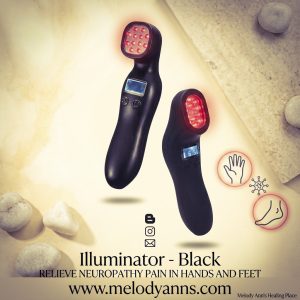
Does the Solex illuminator black have any information on neuropathy?
However, when comparing the device’s technical specifications against general nerve-healing research, several features align with protocols used for nerve support:
1. Primary Wavelength (660 nm Red Light)
-
Device Spec: Uses six 660 nm red laser diodes.
AO Scan Global -
Relevance: 660 nm is one of the most widely studied wavelengths for surface-level tissue repair, blood flow, and skin/nerve stimulation. While 660 nm works well for hands and thin tissue, deeper neuropathy (like deep in the soles of the feet) often benefits from near-infrared (800–850 nm) for deeper penetration.
2. Vasodilation and Microcirculation Support
-
Device Claim: Promotes localized blood cell function, vasodilation, and gentle therapeutic warmth.
-
Relevance: Peripheral neuropathy is frequently tied to microvascular constriction (poor blood flow starving peripheral nerves of oxygen). Stimulating localized circulation is a primary mechanism by which red light aids nerve discomfort.
3. Power & Intensity Range
-
Device Spec: Features 4 power intensity settings ranging from 20 mW up to 180 mW/cm² (plus an “Amplifier” vibration mode).
Solex Global -
Relevance: Higher output settings (120 mW–180 mW/cm²) deliver higher energy density in shorter 5-to-10-minute sessions, which aligns with clinical protocols for targeting localized nerve and joint discomfort.
How it Compares to Dedicated Neuropathy Devices Because the Illuminator is a small, handheld gliding wand designed for spot application, using it on large areas like the entire soles of both feet requires holding and gliding the device manually. In contrast, dedicated foot neuropathy systems typically use flexible light boots or flat arrays that allow hands-free, full-coverage exposure to both 660 nm red and 830/850 nm near-infrared light simultaneously.
If you are using the Illuminator on hands or feet, setting it to a higher intensity (Intensity 3 or 4) for 5–10 minutes per area is the standard approach for localized tissue and circulation support.
Are there any information from SEFI, tuning forks, rife hz?
1. SEFI (Subtle Energy Frequencies Imprint)
In the Solex AO Scan ecosystem, SEFI programs utilize bio-resonance broadcasting and imprinting to deliver subtle energetic frequencies. Practitioners working with sensory nerve discomfort and neuropathy typically focus on programs targeting nerve integrity, local microcirculation, and systemic balance:
-
Nerve & Central Nervous System Support: Frequencies associated with the Peripheral Nervous System (often targeted around 36.8 Hz in frequency-specific microcurrent literature) or broad Nerve Repair / Nerve Support imprints in the SEFI target database.
anatomyandalchemy.com -
Circulation & Microvascular Imprints: Because neuropathy is often linked to localized hypoxia (lack of oxygen to peripheral nerve endings), imprints for Circulation, Vasodilation, or Capillary Health are frequently paired with physical light therapy (like 660 nm red light).
-
Pain & Inflammation Release: Specific Inner-Ease or SEFI programs designed for Inflammation, Pain Free, or Cellular Harmony are imprinted into water, sugar pellets, or wearable patches (or broadcast directly) to quiet overactive pain signals.
2. Tuning Forks (Acoustic & Vibrational Therapy)
Tuning forks offer both diagnostic and direct bio-mechanical sound stimulation:
-
128 Hz (Otto / Osteo Fork): In clinical medicine, the 128 Hz tuning fork is the standard diagnostic tool used on bony prominences (like the big toe or ankle) to test for loss of vibration perception in diabetic neuropathy. In sound therapy, weighted 128 Hz or 64 Hz Otto forks are applied directly to the bone or soft tissue of the feet/hands. The physical vibration stimulates nitric oxide production, boosts local micro-circulation, and gives gentle proprioceptive feedback to sleeping peripheral nerve endings.
Bailey Instruments -
528 Hz (“Miracle” Tone / Solfeggio): Widely used in acoustic sound baths to encourage deep cellular relaxation, reduce sympathetic nervous system overdrive (stress), and promote autonomic balance.
-
174 Hz (Solfeggio): Recognized in acoustic sound therapy as a natural anesthetic tone aimed at easing physical pain and tension in the body.
3. Rife Frequencies (Electromagnetic & Acoustic Hz)
Rife therapy operates on the concept of matching precise frequencies to stimulate biological tissue or neutralize stressors. Commonly cited Rife protocols for peripheral neuropathy and nerve regeneration include:
-
10,000 Hz: Historically utilized as a primary “universal” pain-relieving and nerve-soothing frequency in Rife research.
-
727 Hz & 728 Hz: Frequently applied for general anti-inflammatory support, easing nerve irritation, and promoting cellular repair.
-
852 Hz: Used to support cellular communication and restore neural signaling paths.
-
144 Hz & 1.2 Hz: Often included in protocols intended to enhance peripheral blood flow, helping oxygen reach damaged nerve sheaths.
Combining Modalities for Synergistic Protocols
-
Direct Physical + Subtle Energy: Applying localized physical therapy (like a red light wand or a 128 Hz weighted tuning fork on the soles of the feet) creates direct blood flow and physical nerve stimulation. Broadcasting or imprinting complementary SEFI or Rife frequencies simultaneously works on the bio-field level to calm the central nervous system’s pain response.
-
Hydration: Frequency work relies heavily on conductive tissue; adequate hydration with electrolyte-rich water ensures better acoustic and energetic conduction throughout the peripheral nervous system.
9/2/26 More from my Blog post Neuropathy – “Red Light Therapy and Sound Therapy”
Bridging Light & Sound: A Multi-Modal Approach to Peripheral Neuropathy Relief #
Peripheral neuropathy in the hands and feet—often felt as burning pain, prickling, numbness, or extreme hypersensitivity—presents a complex physiological challenge. While conventional approaches often focus on masking symptoms, integrative modalities like Red Light Therapy (Photobiomodulation), Weighted Tuning Forks, Subtle Energy Frequencies Imprint (SEFI), and Rife Frequencies work synergistically to support cellular energy, enhance blood flow, and quiet overactive nerve signaling.
By addressing the body through physical light, mechanical vibration, and bio-energetic resonance, we can create a supportive environment for nerve recovery and comfort.
1. Photobiomodulation: Energizing the Nerve Microenvironment #
At the core of physical light therapy for peripheral nerves is Photobiomodulation (PBM), also known as Low-Level Light Therapy (LLLT). When targeted red and near-infrared (NIR) light wavelengths penetrate the tissue of the hands and feet, they trigger a cascade of beneficial cellular responses:
-
Mitochondrial ATP Production: Photons are absorbed by cytochrome c oxidase inside nerve cell mitochondria, sparking an increase in Adenosine Triphosphate (ATP) synthesis. This extra cellular energy fuels nerve repair and maintenance.
-
Microvascular Vasodilation: Near-infrared light stimulates the release of nitric oxide (NO), expanding constricted capillaries. Improved microcirculation restores oxygen and essential nutrients to oxygen-deprived nerve endings.
-
Anti-Inflammatory Action: PBM modulates pro-inflammatory cytokines, calming localized irritation in surrounding tissues and easing throbbing or burning sensations.
Optimal Parameters: Look for devices combining 630–660 nm (Red Light) for superficial skin layers with 800–850 nm (Near-Infrared) for deeper nerve penetration, applied for 10–20 minutes per target area.
2. Acoustic & Mechanical Stimulation: The 128 Hz Tuning Fork #
While light operates via photon absorption, sound therapy delivers physical kinetic vibration. The 128 Hz Otto (Osteo) Tuning Fork is a primary tool used in both diagnostic neurology and physical sound therapy.
When the stem of a weighted 128 Hz fork is placed directly against bony prominences in the feet (such as the big toe joint or ankle bone) or wrists, it transmits gentle physical resonance deep into surrounding soft tissue and nerve pathways:
-
Proprioceptive Awakening: The physical vibration stimulates tactile mechanoreceptors, helping “wake up” dull or sensory-impaired nerve pathways.
-
Vibrational Nitric Oxide Release: Physical oscillations encourage local vasodilation, echoing and amplifying the circulation-boosting effects of near-infrared light.
3. Electromagnetic & Subtle Frequencies: SEFI & Rife Hz #
To complement physical light and acoustic vibration, bio-resonance modalities operate on the body’s informational and electromagnetic fields.
Rife Frequencies for Nerve Support #
Rife therapy utilizes targeted frequencies to encourage tissue harmony and ease distress:
-
10,000 Hz — A foundational universal frequency used to quiet overactive pain signals and soothe hypersensitivity.
-
727 Hz & 728 Hz — Applied to help reduce localized inflammatory responses and encourage cellular repair.
-
852 Hz & 144 Hz — Selected to support neural signaling and promote microvascular blood flow to peripheral limbs.
SEFI (Subtle Energy Frequencies Imprint) #
In the Solex AO Scan ecosystem, SEFI programs broadcast or imprint subtle vibrational patterns into water, sugar pellets, or wearable patches:
-
Peripheral Nervous System Support: Aligns with frequencies designed for nerve sheath integrity and optimal impulse transmission.
-
Vasodilation & Circulation Imprints: Energetically reinforces physical microvascular support alongside red light sessions.
-
Pain Free & Inner-Ease: Assists in lowering sympathetic nervous system stress (fight-or-flight), creating a parasympathetic environment ideal for healing.
4. A Synergistic Daily Protocol #
Combining these modalities into a structured routine addresses physical circulation, mechanical stimulation, and subtle energy field alignment simultaneously:
| Step | Modality | Parameters & Method | Main Objective |
|---|---|---|---|
| 1. Hydrate & Prep | SEFI Imprinted Water | Drink 8–12 oz of water imprinted with Circulation & Nerve Support | Boosts cellular conductivity and hydration |
| 2. Physical Light | Red/NIR Light (660/850 nm) | 10–15 minutes per hand/foot at high intensity | Triggers ATP production & deep vasodilation |
| 3. Mechanical Hz | 128 Hz Tuning Fork | Apply stem to 3–4 bony points for 30–60 seconds each | Stimulates nerve endings & nitric oxide |
| 4. Subtle Broadcast | SEFI / Rife Hz Broadcast | Broadcast 10,000 Hz or PNS Harmony during rest | Sustains nerve soothing & bio-field balance |
Disclaimer: This blog post is for educational and informational purposes only and does not constitute medical advice. Peripheral neuropathy can stem from underlying medical conditions (such as diabetes). Always consult a qualified healthcare professional or neurologist before starting any new therapy routine.


